
What is Sichuan pepper
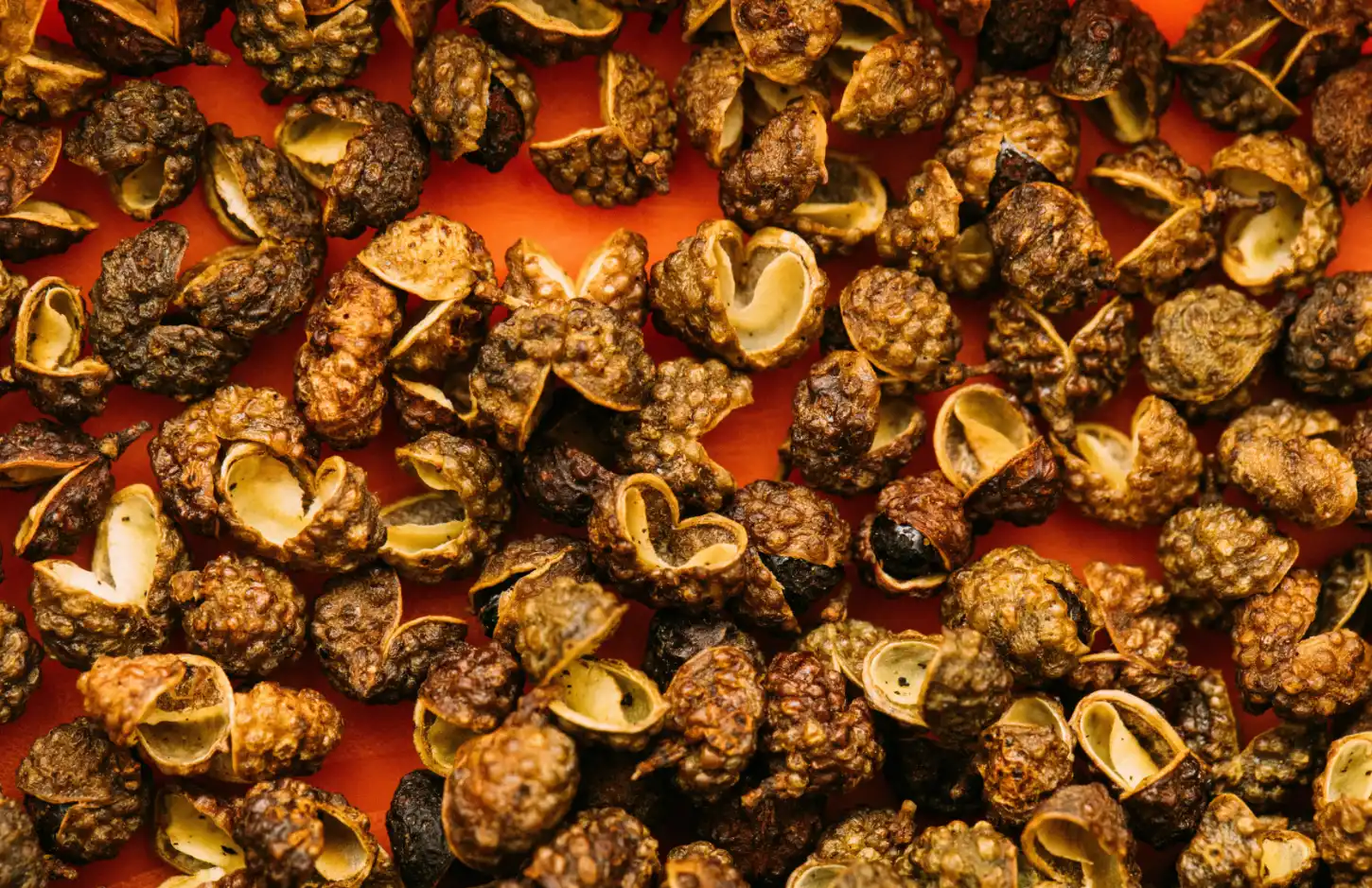
Sichuan pepper is a Chinese spice made from the dried pericarp of small fruits in the genus Zanthoxylum, part of the Rutaceae family, the same group as citrus trees.
In botanical terms it sits far away from black pepper, which belongs to the genus Piper, and in the kitchen only the outer husk is used; the hard black seed inside is usually discarded because it tastes bitter and has little aroma.
In Chinese the most common name is huājiāo, flower pepper, a label that covers several related spices used in Sichuan cooking and in neighbouring provinces. English tends to use Sichuan pepper or Szechuan pepper, spellings that follow different systems for rendering the name of the province, while pointing to the same group of plants.
The plant
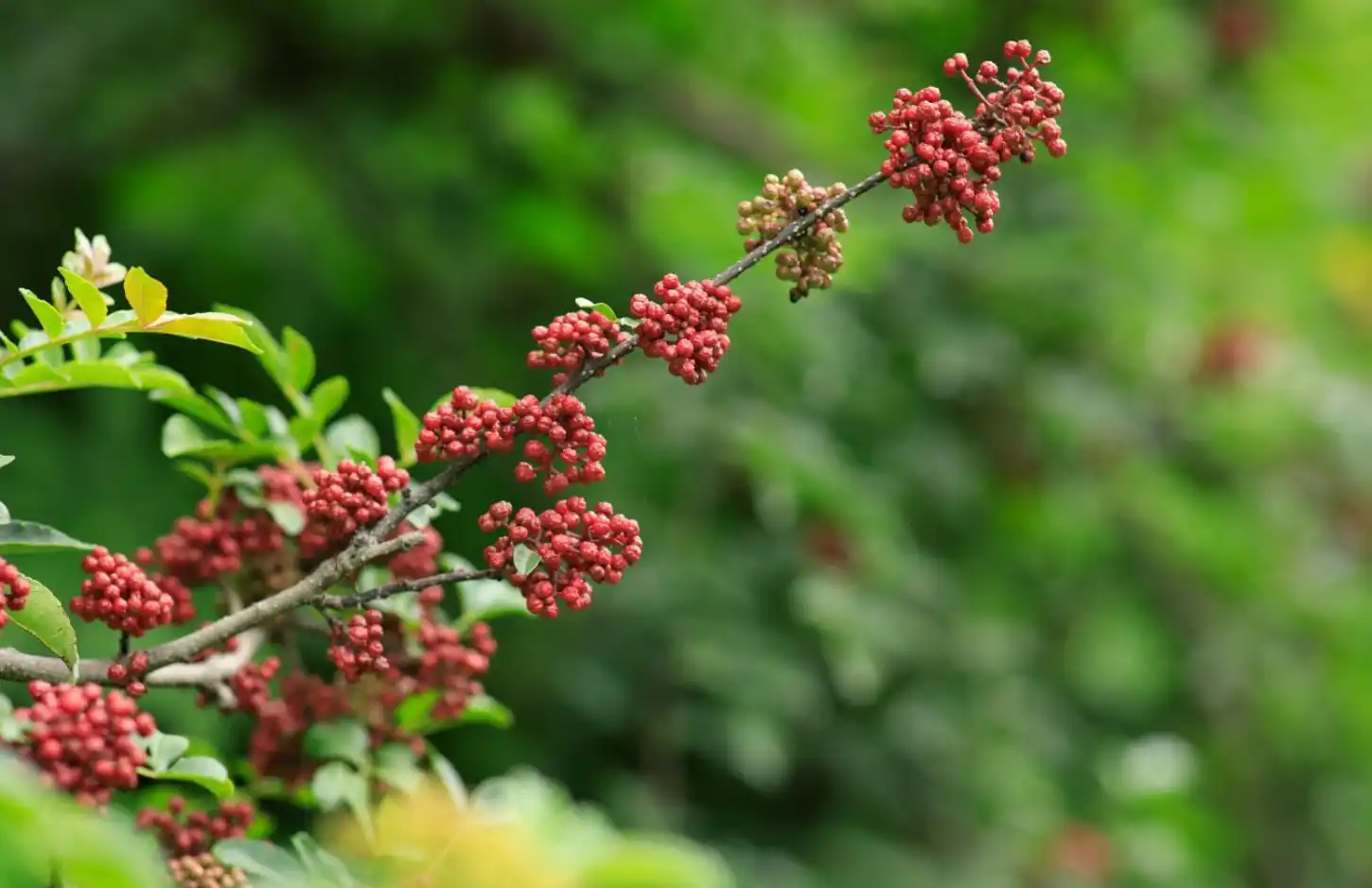
The Sichuan pepper plant looks more like a small, armed citrus tree than a pepper vine. It grows as a deciduous shrub or small tree, usually between three and seven metres in height, with an open, light canopy and branchlets lined with short, sharp thorns.
The leaves are pinnate, made up of many small glossy leaflets that release an aromatic, citrus‑like scent when crushed, a first clue to its kinship with lemons and oranges in the Rutaceae family.
Several species share the commercial name “Sichuan pepper”. The best documented for culinary use are Zanthoxylum bungeanum, very common in China, Z. simulans and Z. armatum, native to Himalayan regions, and Z. piperitum, known as Japanese pepper or sanshō in Japan and chopi in Korea.
All grow in temperate to subtropical Asia, on hillsides and terraced fields, where they tolerate cold winters and hot summers as long as the soil drains well.
On the branches, after flowering, clusters of tiny fruits appear, green at first, then red or reddish‑brown when ripe.
Each fruit is a small capsule that dries and splits open to show a shiny black seed. In the kitchen, cooks keep only the pericarp, the papery husk rich in essential oils and sanshool, and discard the seed, which tends to be hard and bitter.
This outer shell is what gives the spice both its perfume and its trademark tingling effect.
The rest of the plant is far from neutral. Young leaves and flowers of Z. piperitum are used in Japan as aromatics, for example in soups and rice
Origins and history
Sichuan pepper has deep roots in the hill regions of south‑west China, especially in Sichuan, Gansu and the broader Himalayan belt. Early Chinese sources record its presence in the Qin period, where it appears in pharmacopoeias and ritual contexts rather than as a simple kitchen spice. In classical texts it sits in the same family of ingredients as ginger and cassia, a group that warms, moves circulation and supports digestion.
Before chilies arrived from the Americas, Sichuan pepper was one of the main tools to give “strength” and sharpness to local cooking. It seasoned meat broths, pickles and sauces and helped mask the flavour of preserved or strongly flavoured ingredients in regions with humid summers and cold winters. In those early phases it defined a regional taste that was pungent and aromatic rather than fiery in the modern sense.
From the sixteenth to the eighteenth century, the slow spread of chili through China met this existing spice culture and reshaped it. In Sichuan the meeting between chili and Sichuan pepper produced the flavour code now summed up in the word málà, where heat and numbness sit side by side. What had been an indigenous pungent spice became one half of a pair that now structures many of the region’s canonical dishes.
Today China is the leading producer of Sichuan pepper, with more than 23 million mu in cultivation, roughly 1.53 million hectares across over twenty provinces. Key production zones include Hanyuan in Sichuan, Wudu in Gansu and Jiangjin in Chongqing, areas that have built specialised orchards and processing facilities around the crop.
Growers and local governments distinguish between red cultivars, such as Dahongpao, and green types, such as jinyang and vine pepper, each with its own aroma profile and commercial niche. Gansu and Sichuan act as hubs for selection, grading and export toward markets in Japan, Korea, the United States and other countries, where demand now spans both restaurant kitchens and packaged málà products.
Aroma, flavour and use
On the palate, Sichuan pepper behaves in a very different way from both black pepper and chili. The sharpness of black pepper comes from piperine, while chilies deliver heat through capsaicin, which activates receptors linked to heat and pain. Sichuan pepper introduces another actor, hydroxy‑α‑sanshool, a molecule that acts on touch and temperature receptors in sensory neurons and creates tingling, buzzing and a controlled “electric” feeling on tongue and lips. Sensory studies describe this as a mix of numbness and fine pulsation, with an intensity peak a few dozen seconds after tasting and a slow, gradual fade‑out.
The aromatic profile is layered even before you taste it. Dried husks release bright citrus notes that recall lemon, pink grapefruit and lime, along with hints of dried flowers, herbs and resinous wood. In the mouth, these aromas sit on top of a balsamic, cooling impression that helps clear the palate after rich broths, stews or oily sauces. Good lots of Sichuan pepper often smell closer to a jar of dried citrus peel with voltage running through it than to a jar of conventional peppercorns.
The tactile component, known in Chinese as má, is the other main axis of its character. The effect feels like a soft vibration that enlarges the sense of space in the mouth and makes the surfaces of lips and tongue more responsive. At a biochemical level, sanshool interferes with specific potassium channels in sensory neurons and alters the way these neurons fire.
The nervous system interprets this signal as tingling and micro‑pulsation rather than simple pain or heat. For cooks, that creates a second register of “heat”: chili for flame, Sichuan pepper for a fine electric hum. In Sichuan cooking the combination is captured by the word málà (má for numbing, là for hot), now a shorthand for the region’s defining flavour profile.
In everyday Chinese cooking, Sichuan pepper appears across a wide range of dishes. It frames a well‑made mapo doufu, seasons the sauce of dandan mian, shapes the broth and dipping sauces of Chongqing hot pot, and supports shuizhu preparations where meat or fish cook in oil and chili.
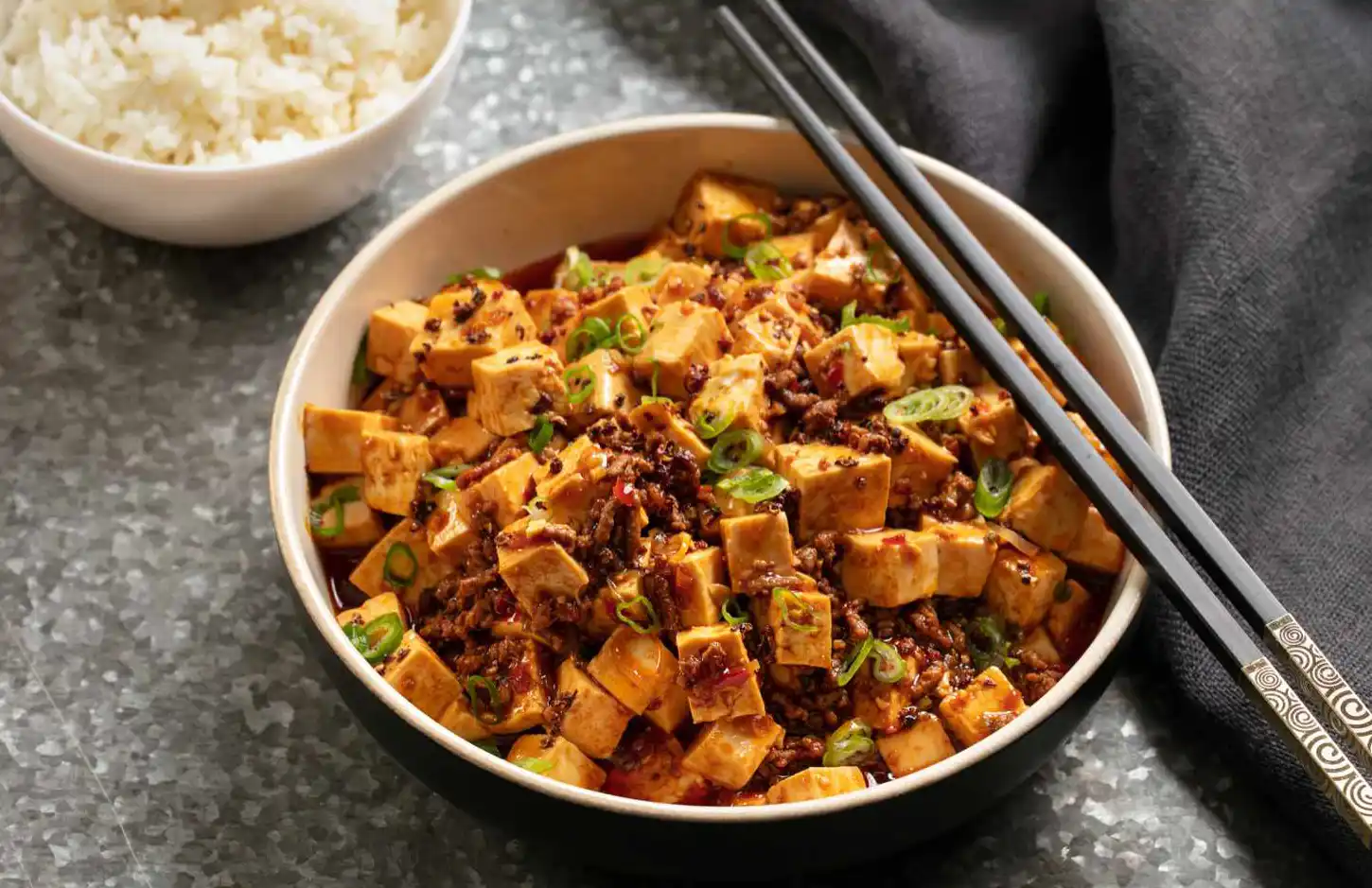
Cooks toast whole husks to build base aromas, grind them into fine powder for finishing and spice mixes, infuse them in neutral oils to create ready‑to‑use condiments or blend them with salt for aromatic rubs on fried foods and grilled meats. The same citrus‑tingling note is also one of the anchors of classic five‑spice powder, where it holds together star anise, cloves, cassia and fennel.
Outside China, the same combination of aroma and mouthfeel has turned Sichuan pepper into a precise tool for chefs and bartenders. The way it cuts through fat helps define dishes based on pork, lamb, duck and oily fish such as mackerel or salmon, which gain clarity without losing juiciness.
In pastry and dessert work it pairs well with dark chocolate, citrus and nuts; the floral and resinous aspects of the spice support cakes, ganaches and creams, while the tingling effect reins in perceived sweetness.
Behind the bar, Sichuan pepper often goes into syrups, bitters and infusions in clear spirits, especially gin and vodka. It works particularly well in sour and highball formats where acidity, citrus aromatics and a light numbing effect on the lips and tongue can play together.
The spice adds an extra dimension to the drink without requiring extreme alcoholic strength or sugar to carry flavour.
For a reader who cooks, writes and tastes for a living, this is the interesting point. Sichuan pepper reshapes the way salt, fat and chili are perceived, so it encourages a rethink of seasoning and structure in both savoury and sweet recipes. It is a single ingredient that opens a clear space where flavour, touch and temperature intersect and can be composed with intent.
FAQ
What exactly is Sichuan pepper?
Sichuan pepper is a spice made from the dried husks of fruits of Zanthoxylum shrubs, in the citrus family, not from true pepper vines. The hard black seeds inside the husks are usually discarded because they are bitter and low in aroma.
Why does Sichuan pepper make my mouth tingle?
The numbing, buzzing effect comes from hydroxy‑α‑sanshool, a molecule that acts on touch and temperature receptors in sensory nerves. Studies describe the sensation as fine vibration and light numbness, with a peak in intensity several seconds after tasting.
How does the flavour differ from black pepper and chili?
Black pepper hits mainly as sharp heat from piperine, chili as burning heat from capsaicin. Sichuan pepper adds bright citrus notes, hints of dried flowers and resin, and a cooling finish, together with the tingling má sensation.
What is the difference between red and green Sichuan pepper?
Red and green types come from related plants with distinct flavour profiles, not from different stages of ripeness. Green varieties taste brighter and more intensely citrus, often used with fish and vegetables, while red types feel deeper and woodier, and work well with tofu and red meat.
How is it used in Chinese cooking?
In Sichuan and neighbouring regions, the spice builds the málà profile, the pairing of numbing má and hot là in dishes such as mapo doufu, dandan noodles and Chongqing hot pot. Cooks toast whole husks, grind them for finishing, infuse them in oil and mix them with salt for rubs and table seasoning.
Has Sichuan pepper ever been restricted or banned?
Imports into the United States were restricted from 1968 because of concern over citrus canker, a disease of citrus trees, since Zanthoxylum belongs to the citrus family. The USDA later allowed imports again, provided the spice received heat treatment to eliminate any potential plant pathogens.