
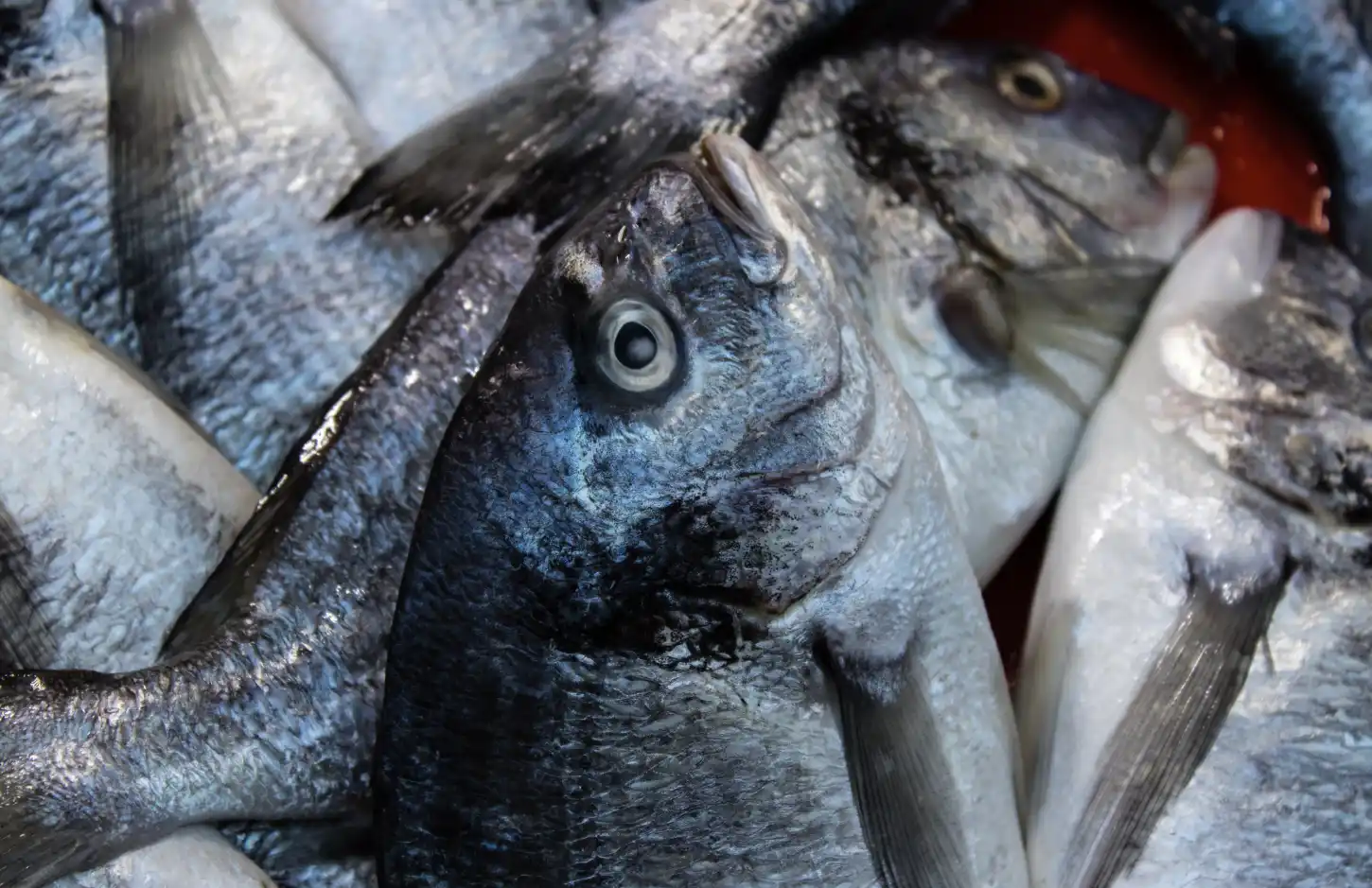
The Mediterranean Sea is a semi-enclosed sea with limited exchange with the Atlantic, and precisely for this reason it has developed a distinctive ecosystem, rich in species and relationships.
In a relatively compact area, it is home to more than 17,000 species, many of them endemic, meaning found nowhere else.
On the seabed, Posidonia oceanica meadows do far more than their name suggests: they are not algae, but true marine plants that oxygenate the water, stabilize sediments, and provide shelter for eggs, larvae, and small fish.
Around these expanses live crustaceans, mollusks, sponges, cephalopods, and a coastal fauna that follows light, currents, and temperature with almost seasonal precision. It is a sea whose average depth is relatively modest, yet whose structure is complex, and this diversity helps explain the richness of its traditional fisheries.
Within this setting moves the blue fish, from sardines to anchovies, from horse mackerel to mackerel: small, fast, nutritious species that have long been central to Mediterranean cooking and to the daily life of port communities.
Its waters have connected different shores, shaping trade, fishing techniques, and eating habits across the countries that face it, from the Maghreb to Italy, from Greece to Spain.
European anchovy
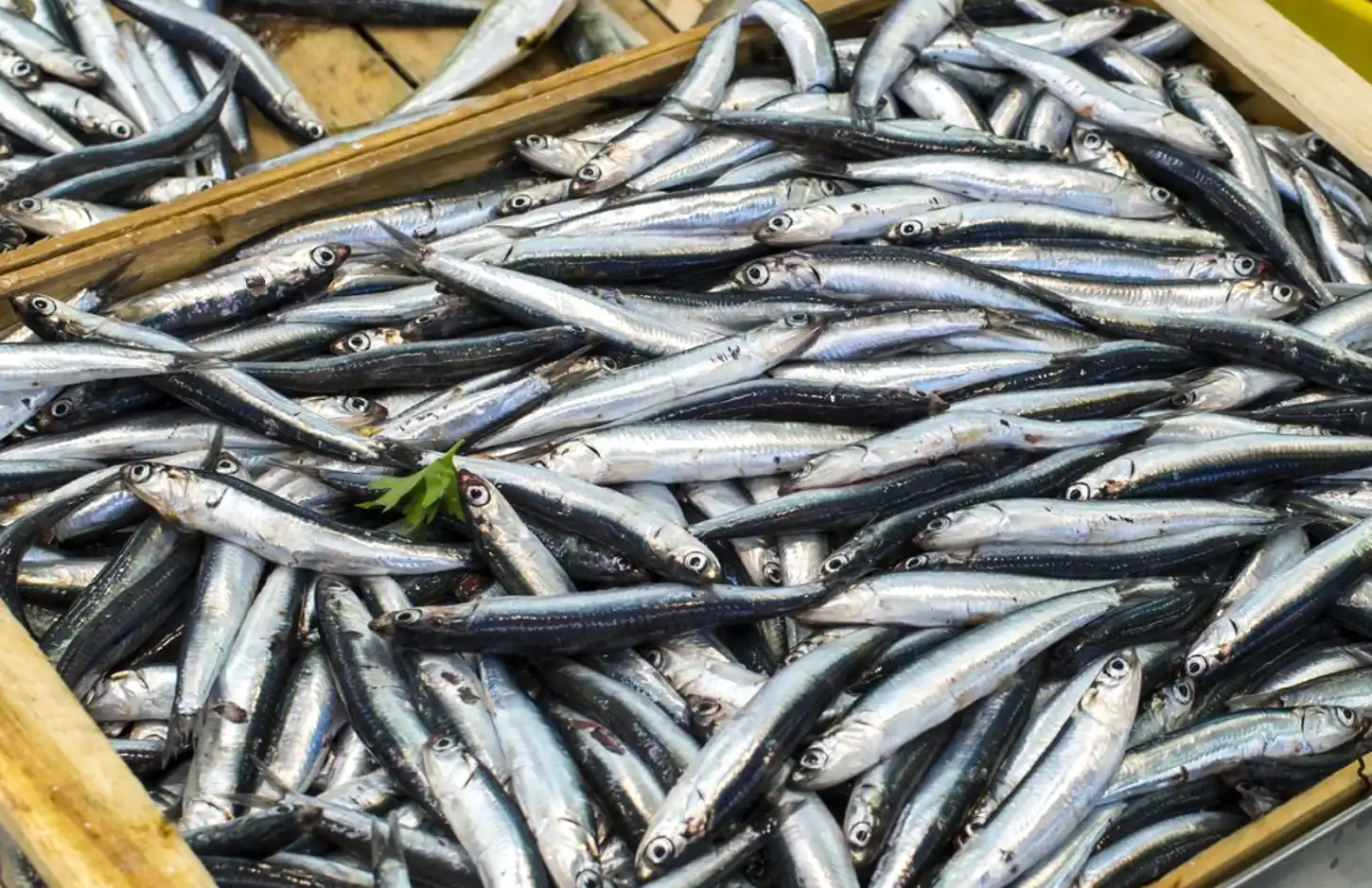
Anchovies are among the most recognizable blue fish in the Mediterranean: they live in schools, move along the coast, and feed on plankton, mainly filtering small crustaceans and other pelagic organisms.
They are usually caught with purse seines and lampara nets, as well as other coastal fishing gear, and the best season generally runs from spring to summer, when they move closer to shore.
Their flesh is pale, delicate, and tender, with a clean, savory marine flavor that never feels overpowering: that is why they are used fresh, fried, marinated, baked, or preserved in salt or oil, in preparations that deepen their flavor.
They are a fish with bones, small but present, which are easy to manage in cooking and traditional recipes. In the Mediterranean, especially in the Adriatic, they remain a widespread and identity-defining resource, part of a food culture that combines simplicity, technique, and memory.
Sardine
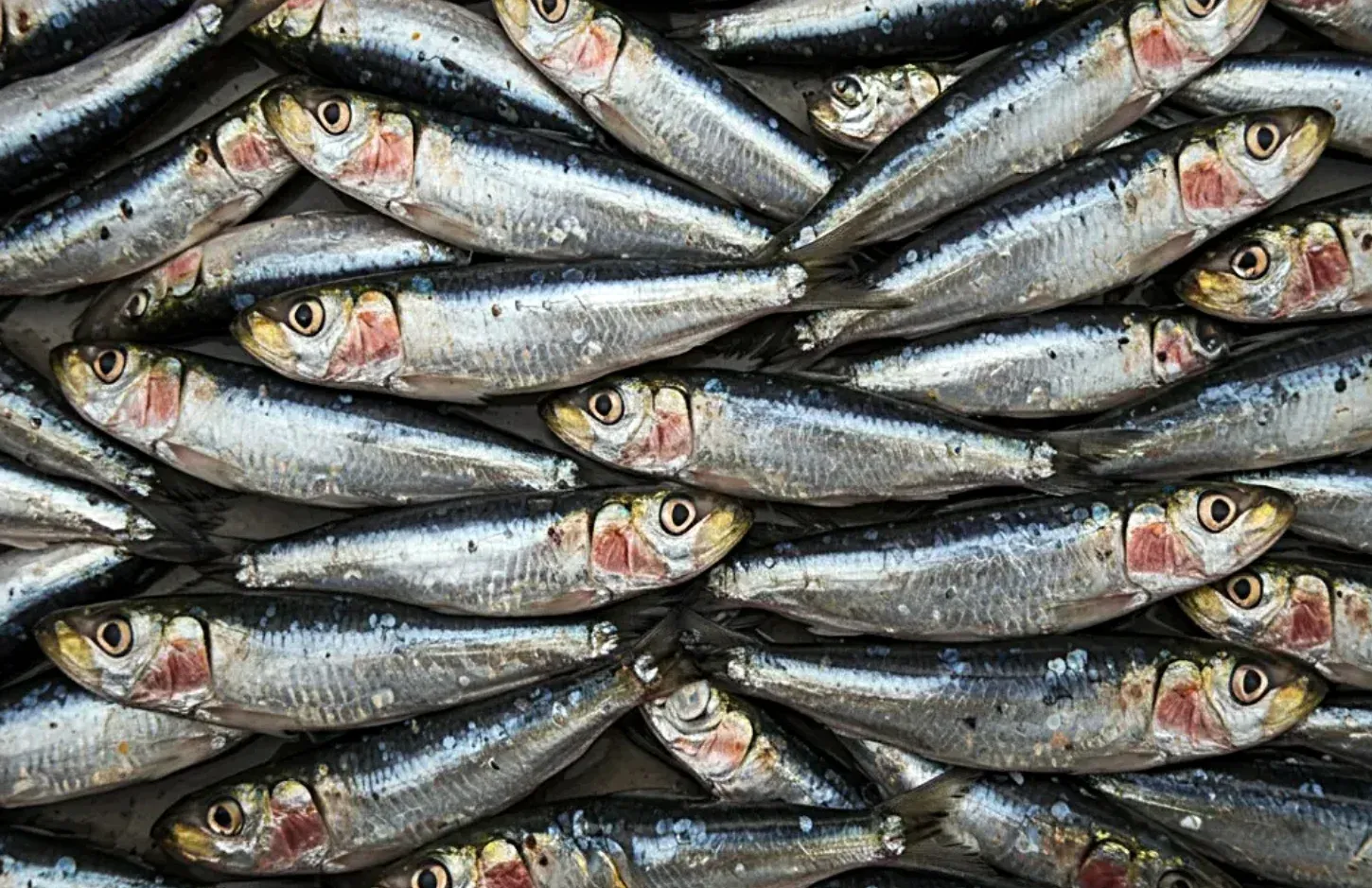
Sardines are one of the most widespread blue fish in the Mediterranean, especially along the Adriatic coast and in Sicily, where they travel in schools and feed on plankton, filtering also small crustaceans.
They are mainly caught with purse seines, pelagic nets, and lampara lights; the best size is generally found between spring and summer, when the fish is fattier and the flesh is juicier. The flesh is soft and compact, with a clean yet elegant flavor, savory without being aggressive.
In the kitchen, it works well grilled, fried, baked, or marinated, but it also shines in preserves, in oil or salt, where the flavor becomes deeper. It has thin but present bones, easily managed with careful cleaning or traditional processing.
It is a fish that speaks the language of the Mediterranean: simple, generous, and closely tied to the coast and to seasonality.
In the markets of Southern Europe, it is a daily presence, but also an ingredient that crosses cuisines, from pasta with sardines to grilled preparations, warm salads, and homemade preserves that extend its life beyond summer.
Mackerel
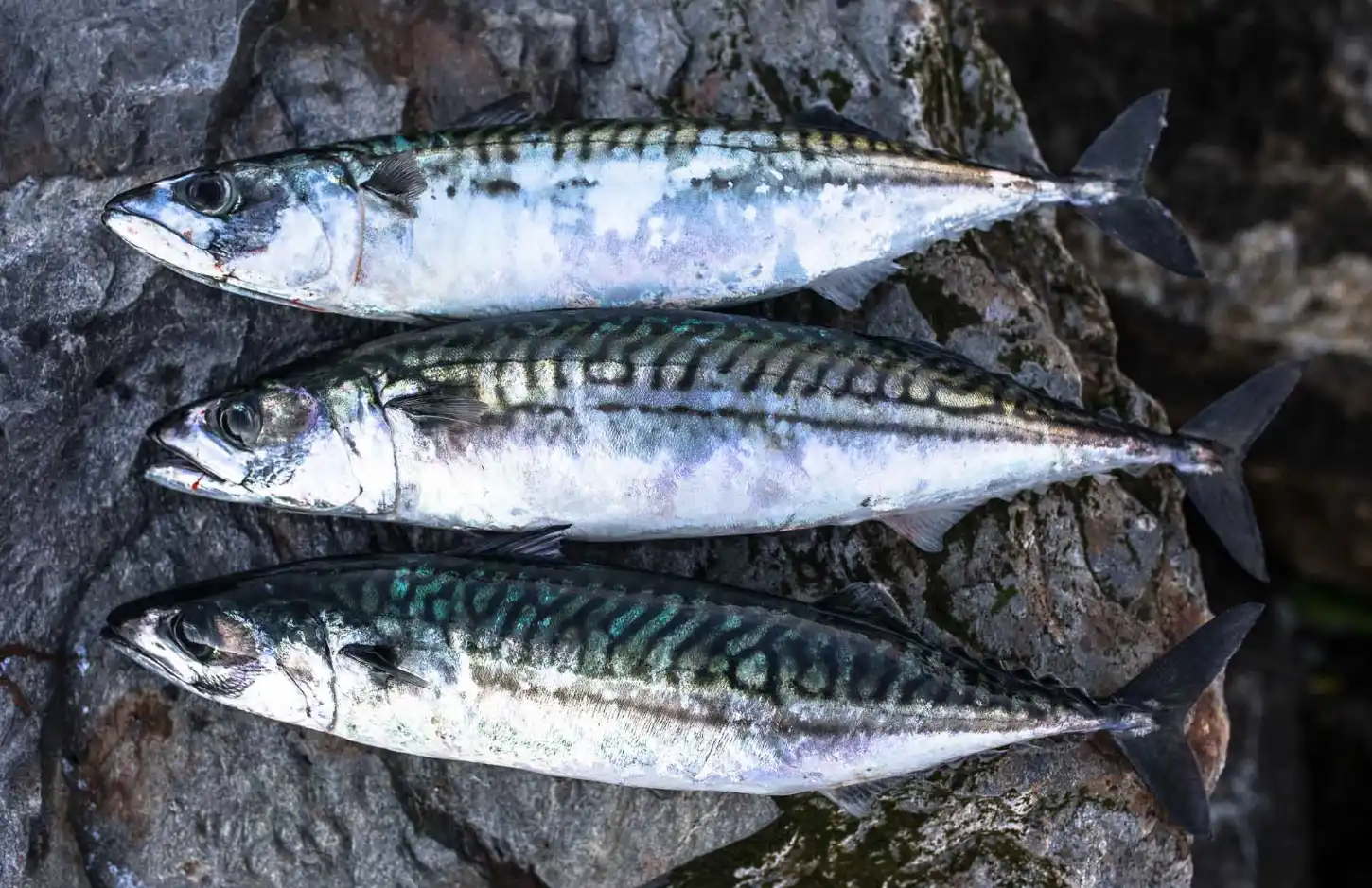
Mackerel is one of the most common blue fish in the central and western Mediterranean, with a wide distribution that extends into the North Atlantic.
It lives in schools, draws closer to the coast in the warmer months, and moves between open and deeper waters, following plankton and small fish, which make up its diet.
It is mainly caught with purse seines and other pelagic systems, a fishing method that matches its compact and fast movements.
In the kitchen, it offers firm, moist flesh with a bold, marine flavor and a rich fatty note that makes it instantly recognizable.
The meat is darker than that of many other blue fish, tender yet dense, well suited to grilling, baking, pan-searing, escabeche-style preparations, and pasta dishes served warm or cold.
It also works well in preserves, in oil or brine, where the flavor gains depth without losing its character.
It has bones, clearly perceptible but easy to manage when the fish is properly cleaned.
Its best season generally runs from spring to summer, when it is more abundant near the coast and the flesh reaches the right balance of flavor and texture
Garfish
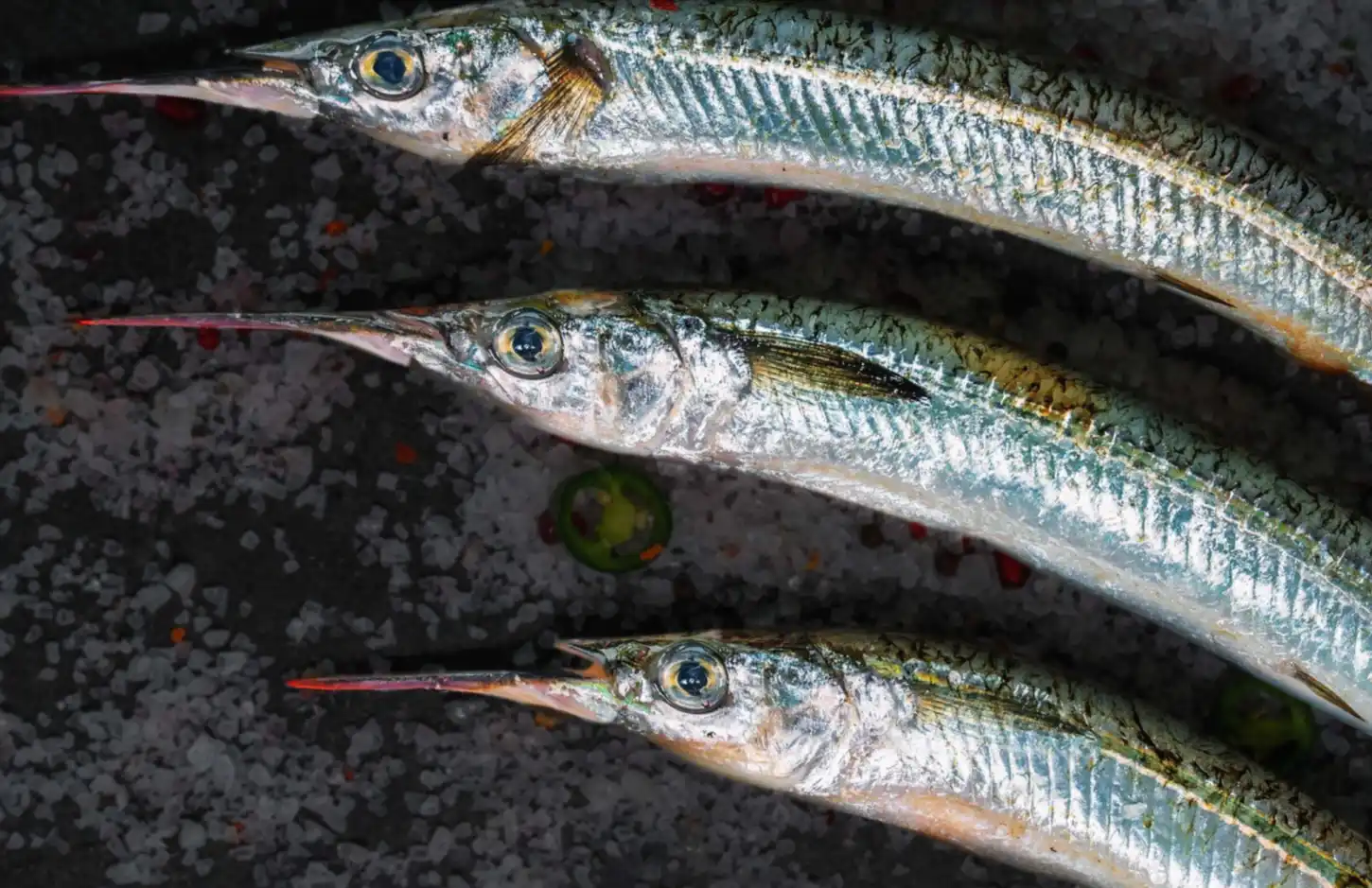
The garfish is a slender, silvery fish found in the Mediterranean and along the eastern Atlantic, usually close to the coast and often in small schools.
It feeds mainly on small fish and other pelagic prey, and it is caught with artisanal gear such as nets and hooks, especially from late spring through autumn, when it stays nearer the shore.
Its flesh is white, lean, and delicate, with a clean marine flavor that is less fatty than other blue fish and can turn slightly firm if overcooked.
In the kitchen, it works best in quick preparations: grilled, pan-seared, or stewed, as in traditional Ligurian recipes, while it is less common in preserves than sardines or anchovies, though it can be pickled or kept in vinegar-based preparations.
It has thin, numerous bones, so careful cleaning matters. A fish of the coast, it suits a table that values simplicity, speed, and the direct taste of the sea.
Round sardinella
The round sardinella, known in Italian as alaccia, is a Mediterranean blue fish that lives close to the coast in schools and feeds mainly on plankton, especially zooplankton.
It is usually caught with coastal nets and purse seines, following seasonal movements that bring it nearer the shore in warmer months.
Its flesh is pale, tender, and fairly fatty, with a clean marine flavor that is less sharp than anchovy and more rounded than sardine.
In the kitchen, it works well grilled, baked, fried, or stewed, and in southern Italian traditions it also appears in salted preserves, where its flavor becomes fuller and more persistent.
It has thin, present bones, so careful cleaning matters.
The best season is generally spring and summer, when the fish is more abundant and the meat reaches a better balance of texture and taste.
Sprat
The sprat, also known as papalina, is a small bluefish widespread above all in the north‑western Mediterranean and the Adriatic, where it moves in large schools and is caught with fishing techniques similar to those used for sardines, mainly pelagic nets and gear that intercepts shoal movements.
It is a planktivorous species, feeding on plankton and representing one of the simpler yet most interesting links in the marine food chain; it has tender, slightly oily flesh, soft and delicate flesh, a full, savory flavor and a marked iodine note, and is best eaten very fresh because it spoils quickly.
In the kitchen it works well grilled, lightly fried or in quick preparations, while in traditional trade it is also processed in preserves, smoked, salted or canned, especially in markets where this fish is valued for its versatility and modest cost.
It does have small bones, but they are relatively soft, so it is easy to eat, particularly when the fish is cooked whole or transformed into tins.
Seasonality is tied to reproductive periods and stock availability, with a good window from late winter through spring in the Mediterranean; in some parts of the Adriatic fishing concentrates in specific months and historically tends to avoid the peak of July and August.
Little Tuna
The little tuna, or tonnetto alletterato, is a small, fast‑swimming tuna that inhabits much of the Mediterranean, from the coasts of Sicily and Liguria to the Adriatic, moving in schools and rising to the surface as it chases small fish and cephalopods, which it hunts as an active, opportunistic predator.
It is a pelagic, migratory and social species, caught mainly with encircling nets and gillnets, as well as with pole‑and‑line and trolling gear in artisanal and sport‑fishing contexts, with an intense fishing season between May and November when schools approach the coast to feed. Its flesh is lean, dark‑red and firm, with a compact, slightly fibrous texture, a bold, quite “fishy” taste that is more pronounced than red tuna, yet still clean and iodine‑rich, and it is prized above all when very fresh in quick Mediterranean dishes.
In the kitchen it works well grilled, seared on the plancha, sliced into carpaccio or tartare, or in light stews, but it is also used in preserves, either canned, salted or marinated, particularly when dealing with smaller-to-medium‑sized fish that lend themselves to easy processing. It does not have fine, hair‑like bones like anchovies or sprats, but rather thicker, more compact bones, so it still needs careful filleting, especially when served whole.
Seasonality aligns with the summer‑autumn window, from May to November, while spawning in the Mediterranean runs from April to September, peaking in July and August, when reducing consumption can help support stock replenishment.
Swordfish
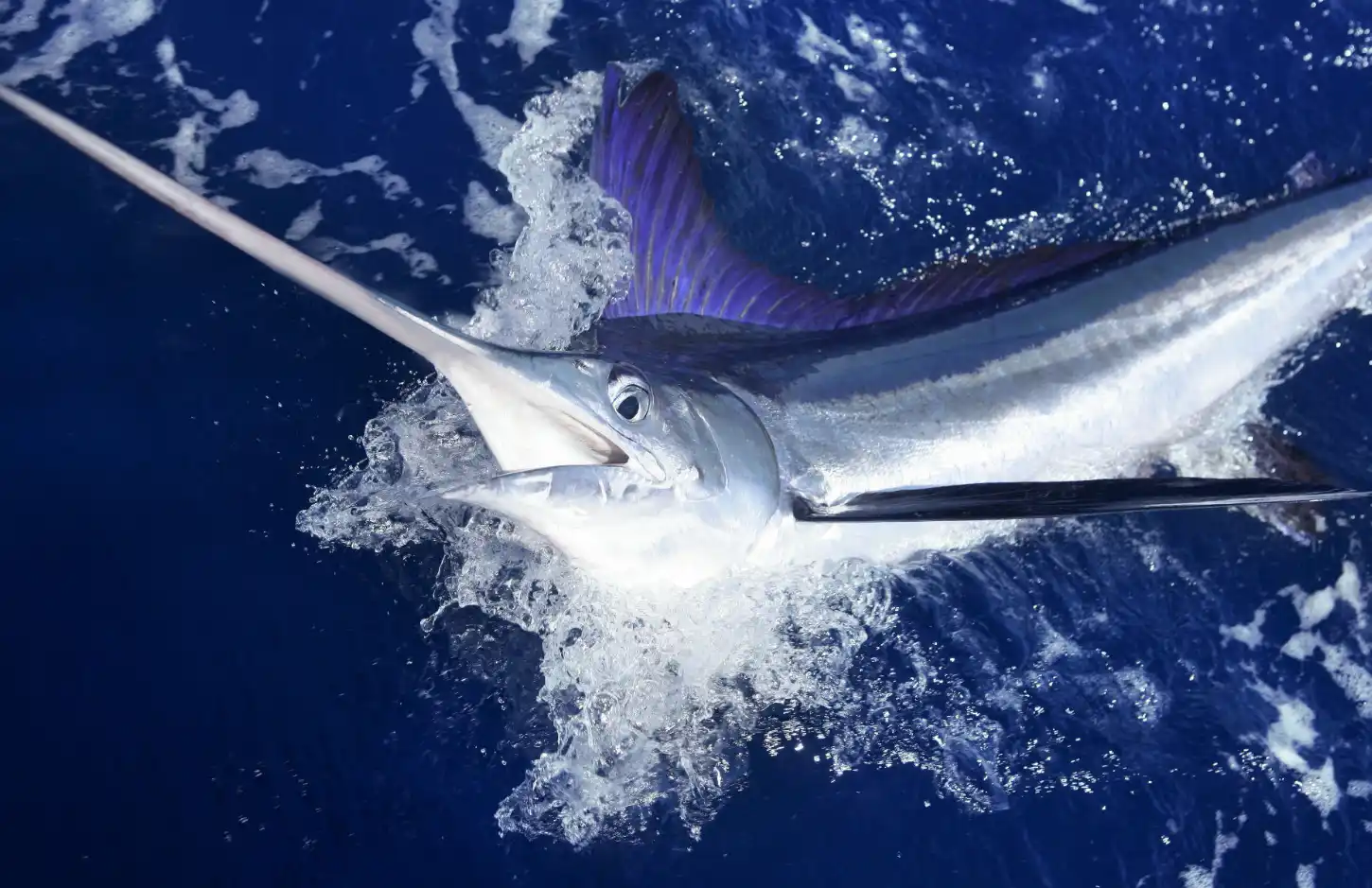
The swordfish is one of the Mediterranean’s most emblematic fish, moving through the basin’s warm waters and linking coastal fishing cultures from Sicily to Calabria, Greece, and beyond.
It feeds mainly on pelagic fish and squid, and its fishery has traditionally relied on harpoons and, today, on regulated longlines and other authorized gear. Its flesh is firm, white to pale pink, with a clean marine taste and a texture that feels almost steak-like, dense but still juicy when cooked properly.
In the kitchen, it is best cut into steaks and served grilled, pan-seared, or baked, often with tomatoes, capers, olives, citrus, or herbs that match its direct flavor.
It also appears in preserved or semi-preserved preparations, though less often than oily blue fish. Swordfish has a large central bone and very few small bones, which makes it easy to portion. In the Mediterranean, the best season generally runs through the warmer months, when it comes closer to the coast and the flesh holds its structure especially well.
Red tuna
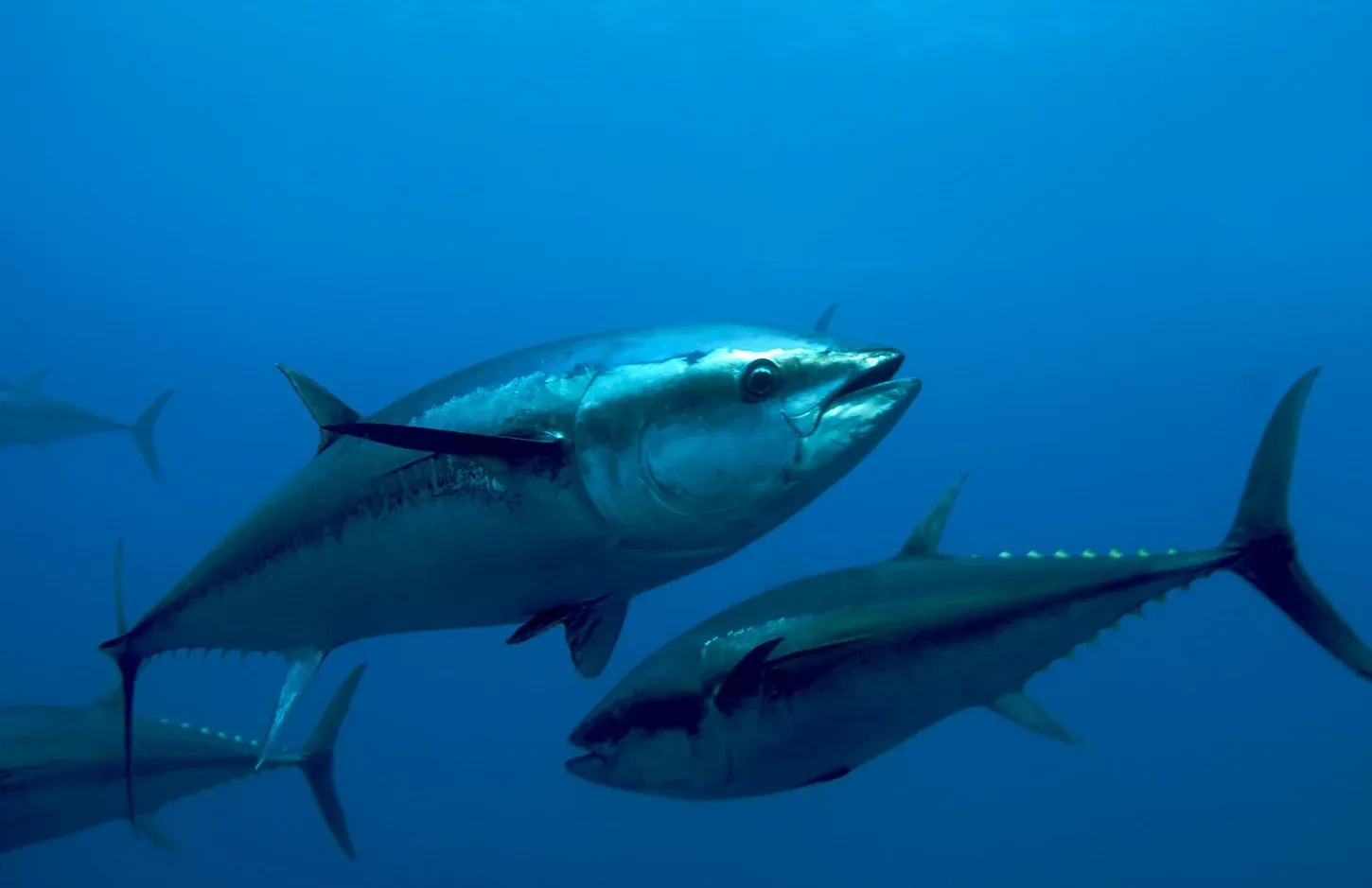
The red bluefin tuna has long been one of the defining fish of the Mediterranean, where it migrates through spawning and feeding grounds shared by Italy, Spain, Greece, Croatia, and Tunisia.
It is a fast pelagic predator that feeds on sardines, anchovies, mackerel, crustaceans, and mollusks, and its fishery has historically shaped coastal economies across the basin.
Today it is caught under strict quotas and regulated gear, while part of the market also comes from fattening in cages after capture.
Its flesh is deep red, compact, and finely grained, with a rich, savory flavor and a fatty texture that turns the cut almost buttery when served raw or only lightly seared. I
n the kitchen, it is used in sashimi, tartare, steaks, and grilled tranches, while preserved forms appear in oil or in semi-preserved products.
It has no small bones like many blue fish, but a central spine and a few accessory bones that are usually removed in cutting.
In the Mediterranean, the fresh season generally runs from early summer into autumn, with the peak linked to spawning migrations and coastal availability.
Ricciola
The red bluefin tuna is one of the Mediterranean’s most prized fish, moving through the basin’s warmer waters and linking the shores of Italy, Spain, Greece, Croatia, and Tunisia.
It is a fast pelagic predator that feeds on sardines, anchovies, mackerel, crustaceans, and mollusks, and it has long shaped both coastal fishing and high-end cooking in the region.
Today, its capture is strictly regulated, with quotas and authorized gear, while part of the supply also comes from fattening in cages after capture. Its flesh is deep red, compact, and finely grained, with a rich, savory flavor and a fatty texture that turns almost buttery when served raw or lightly seared.
In the kitchen, it is used for sashimi, tartare, steaks, and grilled tranches, while preserved formats appear in oil or as semi-preserves. It has no small bones like many blue fish, but a central spine and a few accessory bones that are removed during cutting.
In the Mediterranean, the fresh season generally runs from early summer into autumn, with the strongest availability tied to spawning migrations and coastal presence.